Blood & Bodily Fluid Cleanup for Homes and Facilities
Not every call involves a death. A medical event at home, a fall, a nosebleed that would not stop, an injury in a warehouse aisle, an incident in a hotel room or a community clubhouse — all of these leave material that has to be treated as a biohazard rather than as a mess. The work is the same either way: remove what cannot be disinfected, clean what can, disinfect after cleaning, and dispose of everything under the rules that govern regulated medical waste.
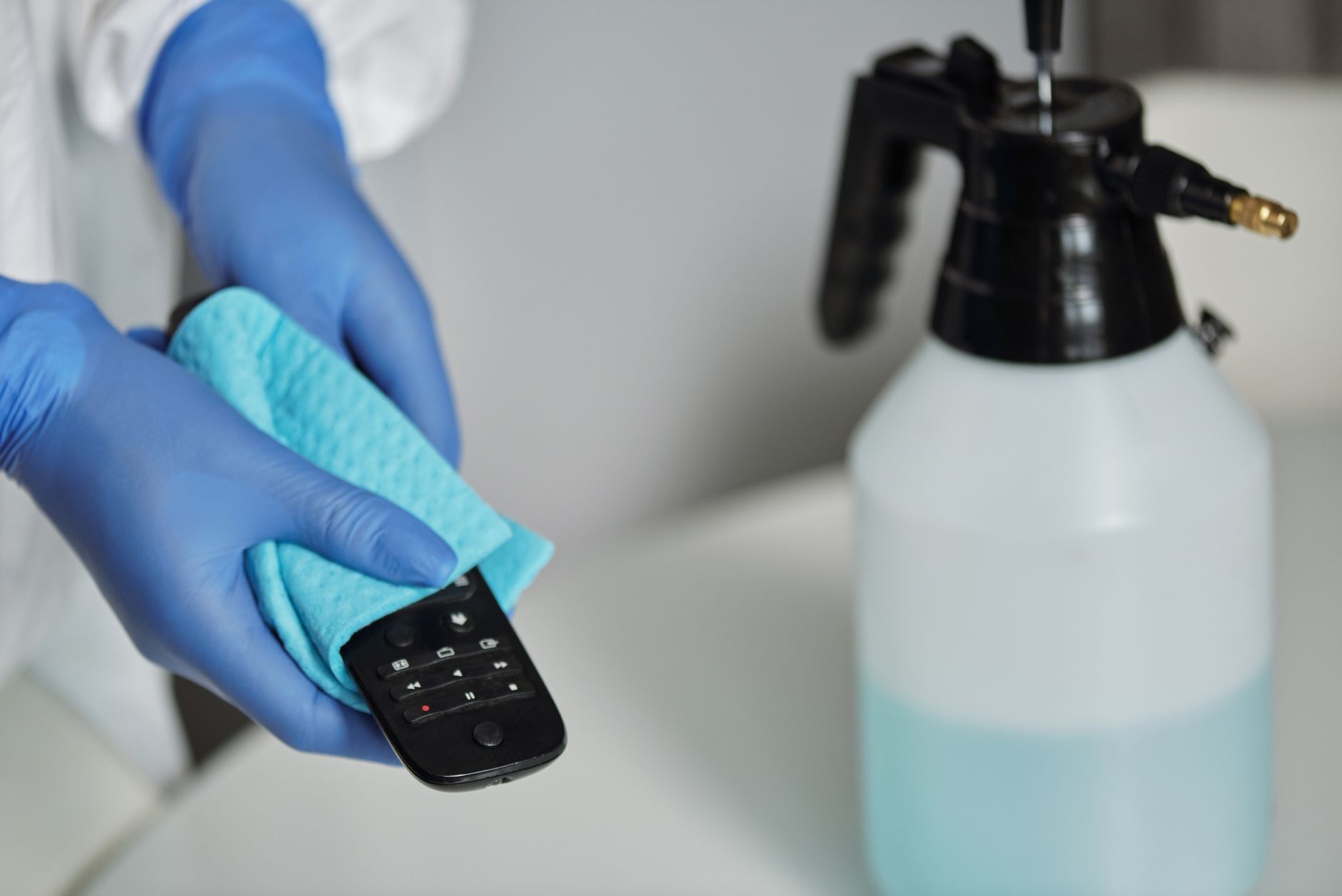
The reason to call rather than handle it in-house is straightforward. Household and janitorial products are not designed for bloodborne pathogens, and wiping spreads material into grout, seams and floor joints where it stays. Our technicians are bloodborne-pathogen certified, work in appropriate personal protective equipment, and clean before disinfecting, because disinfectant applied over soil does very little. Waste leaves the site in approved containers and is manifested, not put in a dumpster.
In homes, the details are in the assemblies. Carpet holds fluid in the pad and the tack strip long after the surface looks fine, so we lift and check rather than treat from above. Hardwood over a plank subfloor lets liquid through the seams, which sets the removal line lower than the visible stain. On a slab, we look at cracks, expansion joints, tile transitions and the gap under the baseboard. In a home built on a steel chassis, we check the sealed underbelly, since anything through the floor collects there instead of draining. Bathrooms almost always involve grout and the void under a tub or vanity.
This is the region's logistics corridor, and industrial calls are a regular part of the work. Warehouses and distribution centres in Fontana, Rialto, Ontario, Chino, Redlands and up through Victorville have their own conditions: large spans of sealed or unsealed concrete, saw-cut control joints that carry liquid a surprising distance, racking legs and pallet feet that trap it, and forklift aisles that cannot stay closed for long. We scope by joint layout rather than by the visible footprint, work around shift changes where we can, and give facility and safety managers written documentation for their records. If your incident-response plan does not have a biohazard contractor in it yet, that is worth fixing before you need one.
Hotels along the freeway corridors call about guest rooms, hallways and shared restrooms. Mattresses, box springs, carpet pad, upholstered seating and grout are the usual items in question. We tell you honestly what can be cleaned and returned to use and what should be replaced, and we arrive in unmarked vehicles so the work does not become a topic in the lobby. HOA and community managers call about clubhouses, pool decks, laundry rooms, corridors and mail areas, where the concern is usually shared surfaces and how confidently they can be released back to residents.
Every job ends the same way: verification that surfaces have been cleaned and disinfected, a written scope of what was removed and what was treated, photographs, and waste documentation. When a homeowner, renter or commercial policy covers the loss, we bill the insurer directly and provide what the adjuster asks for. If you are unsure whether an event needs a contractor at all, describe it on the phone. Sometimes the answer is that you do not need us, and we will say so.
What We Do
- Cleaning first, then disinfection, then verification
- Bloodborne-pathogen certified technicians in full protective equipment
- Concrete joints, carpet pad, grout and floor voids checked, not assumed
- Warehouse, hotel, HOA and residential scopes with written documentation
- Regulated medical waste manifested; direct insurance billing available